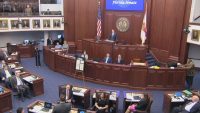
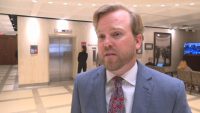
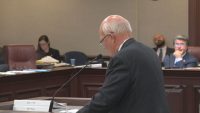
The Florida House suspended its session and five members are being tested for COVID-19 after an attendee of two Washington DC conferences tested positive for the virus.
The House chamber was emptied Monday afternoon and desks of the members were disinfected.
House communications Director Fred Piccolo says the risk of them testing positive is low.
“Members have chosen to self-isolate out of an abundance of caution. They are feeling fine, they have no symptoms. They haven’t exhibited symptoms for ten days and we feel like they’re just doing this out of an abundance of caution. They should be just fine,” said Piccolo.
Representative and Doctor Cary Pigman attended to the potentially infected members, but risk was determined to be very low and the members were allowed to return to the chamber within an hour.
On a unanimous vote, the Florida Senate voted to establish a task force to identify and preserve African American Cemeteries across Florida Monday.
“Not far from here in Tampa are the graves of African Americans who were lost to time and indifference. Across the State of Florida such cemeteries called ‘lost’ are being found. What we have learned as a society is that we cannot continue to run away from our collective history and we can no longer allow others to rewrite that history, or at its worst, force the history off the pages of time,” said Senator Darryl Rouson.
Sen. Janet Cruz of Tampa is the Sponsor.
“It’s my hope that Floridians who were not provided dignity, respect and equal protection in their life nor in their death will be honored and memorialized appropriately,” said Cruz.
Florida’s Family Empowerment Scholarship would be available to more 46,000 students beginning next school year under a bill approved by the Florida House Monday.
The legislation seeks to clear a backlog of 35,000 students waiting to get the scholarship to attend private schools, but Democratic lawmakers largely opposed the move.
They point to 83 religious private schools with anti-LGBTQ policies that are currently accepting the vouchers.
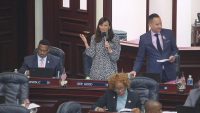
“So if we’re talking about universal education, if we’re talking about these advancements for all of our children everyone in this chamber is onboard for that. But when you are talking about entities that still have the ability to pick and choose the children they accept this is not universal acceptance,” said Rep. Tracie Davis.
The bill passed on an 81 to 39 vote, mostly down party lines.
By a 22-18 vote, the Florida Senate approved its version of E-Verify Monday, setting up negotiations with the House over what sort of verification and audits the state can conduct.
Sponsor Tom Lee said he is hopeful the two can workout how employers feet are held to the fire if they don’t follow the law.
“The Department of Economic Opportunities authority under this bill to conduct random audits is limited only to companies that do not register for E-Verify. Doesn’t require they use E-Verify, but if they register, they are immunized from those random audits. The House bill includes law enforcement and they may well be a better enforcement mechanism,” said Lee.
The House passed its number one priority off the floor Friday.
The bill allows advanced registered nurse practitioners to practice independently.
Representative Doctor Cary Pigman has been pushing the legislation for seven years straight.
He believes allowing the nurses to practice within the scope of their training without having to pay a doctor thousands each year will expand access to basic medical care.
“I think in the long term we’ll see a savings in healthcare cost because prevention and treating basic problems is an economic way to move forward,” said Pigman.
It hasn’t been an easy road.
Concerned quality of care could be affected, the Senate has never had an appetite for the legislation.
Before the House voted to pass the legislation even some Representatives echoed those concerns.
“I wonder what message we are sending and what standards we are legislating when we begin de- emphasizing training, de-emphasizing education,” said Rep. Margaret Good.
But Rep. Pigman said data from other states shows quality of care has not suffered.
“I direct you to all of the studies that have been done and has shown that there is no difference in outcome of care in primary care between nurse practitioners and physicians. There is no evidence of harm. There is only displays of safety and efficacy,” said Pigman.
Negotiations are still ongoing between the two chambers, but for the first time the House Sponsor is optimistic.
“For the first time in the time I’ve been here we have a Senate offer,” said Pigman. “I know what I’d like to get, the Senate has concerns, we’ll find some place to land.”
Rep. Pigman wouldn’t talk details about what trade could possibly be on the table.
“I make the arrows, how the Speaker chooses to use them is up to him,” said Pigman.
But criminal justice reform, tourism marketing funding and land conservation are all candidates likely in the mix.
In a show of support for ARNP’s, the Florida House has been recognizing an advanced registered nurse of the day throughout session. Traditionally both chambers recognize a doctor of the day each chamber meeting.
Summons were served Friday on the former CEO and board members of the Florida Coalition Against Domestic Violence in two lawsuits filed by the state.
The House has failed twice serving former Domestic Violence Coalition CEO Tiffany Carr with a subpoena compelling her to testify.
“I believe she is evading service. At present, we believe she is at her home in North Carolina, behind a locked gate,” said Rep. Tom Leek, who chairs the committee investigating the coalition.
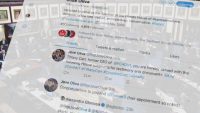
So it voted to allow her to be served by any means necessary.
In this case, via Twitter.
The state constitution gives the House the power to send Carr to jail or fine her for contempt.
“So sooner or later that subpoena will transcend into something greater where law enforcement can go get her, but we are not there yet,” said Leek.
Issuing legislative subpoenas like this one is extremely rare.
As far as we can tell, the House has never voted to send someone to jail for contempt.
Since the beginning of the week, the Department of Children and Families has had staff on the ground at the coalition headquarters.
“We have to take control of evidence and things of that nature, so that work is going on as well,” said DCF Secretary Chad Poppel.
After filing suit the Governor is hopeful the state will get back some if not all of the $7.5 million Carr was paid.
“That money is being used to line people’s pockets,” said Governor Ron DeSantis.
Refuge House CEO Meg Baldwin said that money came directly from cash that would have gone to services for victims.
“We calculated that we would be able to provide 18,597 people with services for six million dollars,” said Baldwin.
An emergency motion filed by the state seeking to dissolve the Domestic Violence Coalition is expected to get a hearing next week.
Senators are pushing forward with legalizing holiday fireworks.
The bill is now ready for a floor vote in the chamber.
Senator Travis Hutson said the bill will allow Floridians to celebrate the 4th of July, New Year’s Eve and New Year’s Day with out fear of perjuring themselves.
“Current law allows individuals to use fireworks if they’re scaring birds and or fish and they can check a box under penalty of perjury to do so. This bill will allow individuals to use fireworks on specific holidays without checking that box and I believe Floridians should be able to enjoy their holidays and not be confused or discouraged by Florida law,” said Hutson.
Both the Florida House and Senate are prepared to take a final vote on a bill that would permit college athletes to profit off their name, image and likeness.
The policy change wouldn’t take effect until 2021.
Senate Sponsor Debbie Mayfield said that’s to give the NCAA time to adopt its own rules around the issue.
“My goal is that we’re very similar and I’ve been working with Senator Rubio’s office as well to ensure that we’re similar in the nature of what we’re trying to do, which is really just allowing them to market themselves,” said Mayfield.
Governor Ron DeSantis supports the bill and is expected to sign it into law when it makes it to his desk.
14-year-old Alyssa Alhadeff was one of the first killed during the Parkland shooting, but legislation carrying her name passed by the Senate Friday hopes to make schools safer going forward.
The bill would require schools to have panic alarms, allowing them to quickly contact police in the event of a dangerous situation.
Alyssa’s mother, Lori Alhadeff said she believes the proposed panic alarms could have saved lives during the Parkland shooting.
“If a threat is in the cafeteria and someone is on the football field the teacher will know to take their class away from the school. So Alyssa’s Law will save lives and if we had Alyssa’s Law on February 14th I do believe that kids, especially on the 3rd floor, could have possibly survived because they would have known how to respond more effectively,” said Alhadeff.
The bill still needs to clear the House, which is expected next week.
There is one new presumed Covid-19 case in the Florida Panhandle.
The state has already monitored 948 people for Covid-19.
248 remain under observation.
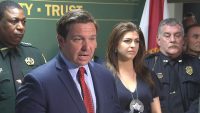
“So these are people who may have been in some other part of China, but they come. Fourteen days. Temperature checks. Seeing if they develop symptoms,” said Governor Ron DeSantis.
The newest presumed case is a man in his 70’s in Santa Rosa County.
“He had been doing international travel. He’s not in shape to fully answer all the questions, so there is an investigation ongoing,” said DeSantis.
Five others who traveled from China are under quarantine in Washington state.
“They tested positive. Now they’re not going to be released from quarantine until they test negative, so we don’t anticipate that having any impact on the people living in Florida,” said DeSantis.
With Spring Break gearing up over the next month, the Governor was quick to point out the risk in Florida remains low.
As of mid-day Thursday, the Department of Health said 31 coronavirus tests have come back negative in Florida Another 69 remained outstanding.
About 135,000 N-95 masks have been stockpiled by the Department of Health, and the Governor is urging residents not to go online to buy the masks because they may be needed for professions.
“For just the average person going to Amazon, buying a mask. That is not what you need to be doing,” said DeSantis.
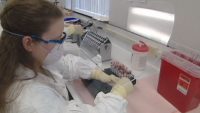
State labs in Tampa Miami and Jacksonville are now able to test for Covid19.
The Governor said at least 10,000 test kits have been promised, but not yet delivered.
He also praised federal officials for quickly imposing travel restrictions from impacted countries, saying it has helped keep the spread here low.
The Florida House is pushing ahead with a bill that would make it harder to amend the constitution through the citizen initiative process.
Grassroots organizations fear the bill would spell the end for constitutional amendments pushed by anyone but millionaires and billionaires.
Jodi James is part of Floridians for Freedom’s effort to legalize recreational marijuana in Florida, and knows how difficult putting an amendment before voters can be
She fears the bill moving through the Legislature would make it much harder.
“An initiative like ours will never happen again,” said James.
Campaigns would have to collect five times as many signatures to have the Supreme Court review their ballot language.
It also would make it up to ten times more expensive to have signatures verified by election supervisors.
“You will not be able to contemplate a citizens’ initiative in Florida unless you have really deep pockets and I’m talking in the neighborhood of $25 million,” said James.
The bill would also require the Attorney General to ask the State Supreme Court if a proposed amendment would violate the US constitution.
House sponsor James Grant says currently no such protection exists.
“You could actually put a citizens’ initiative together to repeal the First Amendment,” said Rep. Grant.
Grant also rejected the idea the additional costs would benefit big-money campaigns.
Instead, he argued it will protect the constitution from policy that should be left to the Legislature.
“What we’re trying to do is strengthen a republic and mitigate the disastrous effects that we see from direct democracies when policy and fundamental policy questions are answered on a whim with marketing campaigns, put into the constitution almost in perpetuity,” said Grant.
The House is still negotiating with the Senate to see what ultimately makes it in the final product.
The bill is expected to be brought before the full Senate and amended Friday.
Local governments that illegally dump sewage would face higher fines under a bill ready for a final vote in the House.
House sponsor Rep. Randy Fine said the current fines the Department of Environmental protection can issue have proved to be ineffective.
“What we’re trying to do is change the thought process where this simply becomes a cost of doing business, which is how it’s looked at today. I’ll just leak some more sewage, I’ll pay a small fine, it’s a cost of doing business. We want them to think about it differently and do the right thing up front,” said Fine.
Any money collected through the fines would go to general revenue, but the bill sponsor hopes the fines will act as a deterrent to prevent the dumping from happening in the first place.
In 2017 the Florida Legislature formally apologized to the former students of the Dozier School for Boys, a now shuttered state reform school where allegations of abuse were rampant.
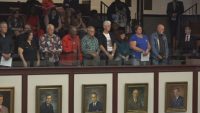
The Florida House recognized a group of the former students known as the White House Boys Thursday.
Rep. Tracie Davis used the opportunity to urge lawmakers to consider financial reparations in the future.
“I want this chamber to see in real life the attendees of a school that we were in charge of and what these men and their families went through. I will continue to run this bill and with the help of my colleagues I know at some point within the next year we will be able to provide some type of relief,” said Davis.
Remains of 40 boys survivors suspect died of abuse were found on the school grounds in 2013.
The Florida House approved a motion to serve former Florida Coalition Against Domestic Violence CEO Tiffany Carr with a subpoena by any means necessary after failing to do so through traditional means Thursday.
The Coalition was discovered to have paid Carr over $7 million over a three year period and awarded millions in salaries and paid time off benefits to executives using state funds.
Rep. Tom Leek is chairing the committee investigating the Coalition, which until recently was the sole conduit of state domestic violence services funding.
Leek said he’s confident the move will get Carr to Tallahassee and before lawmakers.
“So if this were a civil case, which it is not, you could go to the judge and say this person is evading service we need to serve by publication or one of the other extraordinary means. What happened today is the House authorized service by any means possible and what we mean there is literally by any means possible and probably by every means possible,” said Leek.
The State Attorney General and Department of Children and Families announced lawsuits against the Coalition Wednesday in hopes of preserving evidence and recovering the misused funds.
Florida classrooms would be required to start the day with a moment of silence under a bill passed off the House floor Wednesday.
The proposal is causing some to raise concerns about separation of church and state.
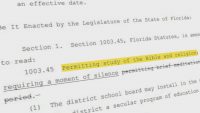
Lawmakers hope to improve the mental health of students by requiring one to two minutes of silent reflection at the start of each school day, but the specific statue the bill changes also includes ‘permitting study of bible and religion’.
Devon Graham with American Atheists fears the bill is a back door way of mandating prayer in schools.
“It’s not neutral, it’s not innocuous by any stretch of the imagination,” said Graham. “There’s supposed to be a strict separation of church and state and it’s for the best for everyone. When things like this impede upon that, that’s an issue for everybody.”
While the bill received unanimous support as it moved through the House committee process, but received 20 no votes when passed off the chamber floor.
It’s faced continued opposition from some Senate Democrats.
“I think you put kids in a very uncomfortable position when they’re in a classroom and the majority of the class is of one faith,” said Senator Gary Farmer during the bill’s final Senate committee stop Monday.
But Senate sponsor Dennis Baxley argued the bill is crafted to benefit students from all backgrounds.
“Without crossing the line with advocating what people do during that moment of silence. That would be between them and their parents,” said Baxley.
The bill allows students to use the moment of silence how ever they best see fit and prohibits teachers from giving direction, but Graham worries that may not be the way it works in practice.
“I could imagine different teachers telling their students different ways of how to do this and it could be explicitly, you must bow your head, you must close your eyes, you must pray,” said Graham.
If the moment of silence is misused, Graham believes lawsuits would likely ensue.







 No Comments »