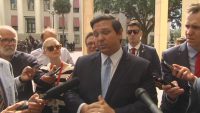
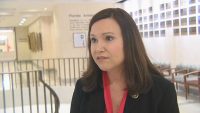
Attorney General Ashley Moody is about to win a major legislative victory.
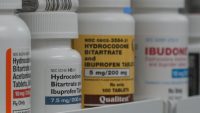
She had initially been thwarted in her efforts to gain access to the Opioid Prescription Database because of privacy concerns, but those concerns have apparently been satisfied.
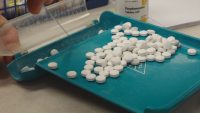
She wants the data to help her prove drug makers and some pharmacies colluded to drive up sales.
“The database was created to insure that opioid drugs, which are highly addictive, we’re not being recklessly distributed. It will assist our office in showing that that was done in many instances, and it will help prove our case that we’ve alleged against certain manufacturers, distributors and pharmacies, certain pharmacies,” said Moody.
The bill that would allow access to the data is up for a final vote in the Senate scheduled for Friday.
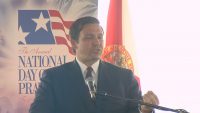
Governor Ron DeSantis was the keynote speaker at Thursday’s 68th annual National Day of Prayer at the State Capitol.
He told those praying that despite a separation of church and state, out nation was very much founded on the principle of a belief in God.
The biggest part of the revolution our country was the idea that our rights are God given. Not given given by government but we have natural inalienable rights life liberty and the pursuit of happiness, and really from the beginning of our country to the present, you know all the great Triumphs in our history have recognized that principle,” said DeSantis.
The Governor will lead a trade mission to Israel later this month.
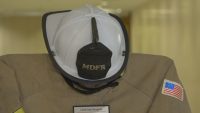
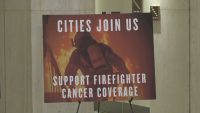
The Florida League of Cities is calling on the Governor to veto a bill that would require local governments provide cancer benefits to firefighters.
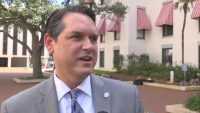
State Fire Marshal and Chief Financial Officer Jimmy Patronis joined a coalition of lawmakers Thursday morning condemning the League of Cities for its stance on the issue.
He’s asking individual cities to break with the League’s position and show their commitment to protecting firefighters.
“My question to them is okay why do we need to question providing a cancer benefit for somebody who is sacrificing their life 24/7, 365 for your family? So i think they’re pretty selfish in their efforts and their messaging,” said Patronis.
Patronis says he anticipates Governor Ron DeSantis will sign the bill, despite concerns from cities.
The Florida legislature is expect to pass a massive criminal justice reform package before session ends.
The bill would raise the threshold for felony theft from $300 to $750.
It also reduces the penalty for a third offense of driving with a suspended license from a felony to a misdemeanor.
Under the bill prisoners will also be able to participate in job training that will carry with them once they are released.
Sponsor, Senator Jeff Brandes says this bill is the first step towards more comprehensive criminal justice reform.
“We’re really focused on making sure that Florida has the best criminal justice system in the United States. It doesn’t today. My goal is after the next few years it will,” said Brandes.
Brandes had hoped to include more discretion for judges to divert from some mandatory minimum sentences and allow for certain prisoners to earn additional gain time.
He says those are issues that will be revisited next year.
Florida lawmakers have voted to allow school boards to arm classroom teachers.
25 counties already allow school employees to carry a concealed weapon, and nothing in the legislation mandates teachers carrying guns.
The legislation enacts dozens of recommendations from the task force set up after the Parkland school shooting.
Yet the nearly three hour House debate focused on almost exclusively on one topic.
“Arming teachers with a gun is not the tool they need to educate our children,” said Rep. Susan Valdez.
Democrats railed against what they called limited training.
“Why do we believe a teacher with minimal weapons training, who’s never had to use their weapon, has the ability and marksmanship to take down an armed assailant armed with a semi-automatic rifle,” said Rep. Adam Hattersley.
But Republicans shot back, pointing to the failure of the Parkland resource officer to engage the shooter
“You could make a very credible argument that Deputy Peterson was the most highly trained SRO in the state of Florida,” said Rep. Spencer Roach.
Democrats pointed out that a deputy accidentally discharged his weapon in a Pasco school when they debated the bill Tuesday.
“I’ve misfired a weapon myself,” said Rep. Matt Wilhite. “I didn’t mean to to that members. Mistakes happen.”
A 25 year law enforcement veteran called it the best deterrent available.
“This bill is the ultimate school hardening law. It allows the good guy to stop the bad. It allows the good guys to defend themselves and our children,” said Rep. Chuck Brannan, III. “The bad guy will never know when the good guy will be there to shoot back, and remember the main thing. It’s going to be the deterrent effect.”
Democrats say unlike last year when there was compromise, this bill was forced upon them.
Five Republicans joined Democrats in opposing the legislation.
The legislation now goes to the Governor, who is expected to sign it.
The Florida Legislature has opted to give Florida schools a big funding boost in the 2019 budget that now awaits Governor Ron DeSantis’ signature.
It revamps the state’s best and brightest teacher bonus programs, by removing the requirement SAT and ACT scores be factored into eligibility.
“This is more bonuses than ever,” said DeSantis.
$300 million for the bonus program is $100 million less than DeSantis asked for initially, but he says coupled with increased flexible funds it can make a notable impact on teacher pay.
“You have an opportunity to see some significant compensation increases for teachers, which I think we have to do. We’re in the bottom third,” said DeSantis. “We’ve got to do better than that.”
DeSantis also says he intends to revisit teacher salaries and benefits next year to address the growing teacher shortage in the state.
2019 will also see an increase in per-student of just over a $240.
Education advocates call it a small step in the right direction.
“We ultimately would like to see more money going into the base, but this is certainly a lot better than what the House was saying and is certainly a lot better than we’ve seen in four years,” said Florida Education Association Vice President, Andrew Spar.
The bill also includes $130 million that would be used to pay for private school vouchers for 18,000 additional students.
The voucher program passed this year is similar to one passed under Governor Jeb Bush.
That program was successfully challenged in the courts.
And traditional public school advocates say another suit could be on the horizon.
“It goes down a very dangerous slope towards destroying the uniform system of public education and certainly gives tax dollars to private institutions,” said Spar.
However, a newly conservative leaning State Supreme Court may be more inclined to side with school choice advocates this time around.
The Florida Senate has made some changes and is now ready to vote on a bill that would require lottery tickets to include a warning label informing players of the addictiveness of gambling.
The warning was originally 26 words long, but now would simply state “WARNING: LOTTERY GAMES MAY BE ADDICTIVE” or “PLAY RESPONSIBLY.”
Senate Sponsor Rob Bradley says the label will hopefully make people think twice before plying the games, particularly if they can’t afford it.
“You have people who can’t afford to play the lottery, playing the lottery and we want to make sure that they are making good decisions, not bad decisions for their family,” said Bradley.
The Senate also removed language from the bill that dealt with prohibiting electronic sale of lottery tickets.
The Florida House is expected to pass its version of the bill banning sanctuary cities in the state.
On Tuesday the House amended the Senate’s bill by removing an exemption for the Department of Children and Families to comply with immigration authorities and protections for undocumented immigrants who were victims of crime.
House sponsor Representative Cord Byrd says the protections already exist.
“There are protections in the law and we have some of those not only contained in the statute, but in the state constitution now. So I would encourage victims and witnesses of crime to cooperate with law enforcement,” said Byrd. “We’re trying to get those people who are committing crimes in our communities and prevent them from harming people further.”
The bill will now have to bounce back to the Senate, but Rep. Byrd says he’s confident there is enough support in the chamber to pass the House language.
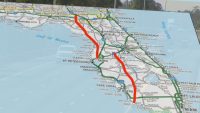
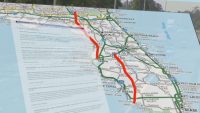
A plan to build a toll road from Collier County to the middle of the state, extend the Suncoast parkway all the way to the state line, and extend the turnpike to the West coast was sent to the Governor Wednesday.
Environmentalists worry it will hurt wildlife, but supporters say the state has to prepare for the future.
“We also got to make sure we’ve got the capacity to get people out of harms way when imminent danger is upon us,” said Rep. Wengay Newton. “As you saw with Irma and when we reversed all the lanes going north on I-75, it was a parking lot. So its important we have other options. Also for the coastal communities, this will be a closer access for them from the Gulf.”
Funding for the project grows from$35 million this year to $140 million a year in four years.
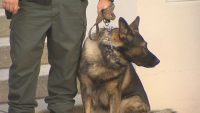
Governor Ron DeSantis ceremoniously signed legislation increasing penalties for harming a police dog or horse Wednesday morning.
It comes after a Jacksonville police dog named Fang was shot and killed by a car jacker last year.
Deputy Matt Herrera says it was like losing a member of his family.
“You see the mantra, the big bad police dig and you can’t pet them, you know this is a ferocious animal. It’s not the case. They are so well trained. You can see there’s all kinds of people around here and all he cares about is a yellow foam ball. So they have that switch and we train that switch into them,” said Herrera. “The same thing we do. Super nice, but when its time for go time he knows it time for go time.”
“These dogs love to work and they are so loyal,” said Debbie Johnson, founder of K-9’s United. “And they would literally sacrifice their life to keep us safe. How can you not honor that?”
The legislation makes harming a police dog or horse a second degree felony, punishable by up to 15 years in prison and a $10,000 fine.
President Donald Trump is expected to hold a rally in the Florida Panhandle on May 8th.
The announcement comes as panhandle residents are still waiting for Congress to pass a disaster relief package to help fund Hurricane Michael recovery.
Florida Chief Financial Officer Jimmy Patronis, who is from Panama City says he hopes the President delivers good news when he arrives in the sunshine state.
“The visit to Northwest Florida would really be extra special if it came with a relief package from Congress. Most importantly is Tyndall Air Force Base and the whole role it plays in the national security of our nation. So it’s critical,” said Patronis.
The primary hold up on the federal level has been a dispute over whether relief for Puerto Rico should be included in a disaster relief bill for Florida.
Horse trading one issue for another is in full bloom at the state Capitol as lawmakers enter the final stretch of their 60-day session.
Rules allow the consideration of bills with little notice in the final days, and it’s not a coincidence when one bill comes up and another doesn’t.
Ending what are called certificates of need for new hospital beds is the top priority of House Speaker Jose Oliva.
Hours after the Senate approved the legislation, two bills to build new toll roads through the state, which is the top priority of the Senate President, showed up on the House’s Special Order calendar.
Longtime lobbyist Ron Book says it didn’t happen by accident.
“Well, I don’t believe in the tooth fairy any more than I believe in coincidences,” said Book.
State Senator Doug Broxson says it’s just how the process works.
“That’s just the way it’s always worked, and thats the way it always will be,” said Broxson.
He likens it to baking a cake.
“The cake is in the over,” said Broxson. “No more ingredients, we just move forward, right?”
“Maybe they just agreed to agree. Maybe thats what it was,” said Senator Ben Albritton.
But Senator Janet Cruz likens the horse trading to making sausage.
“Sausage tastes delicious, but if you saw the way they make it, it’s very, very ugly,” said Cruz.
Book argues that if we see it happen, it can’t be that bad.
“People can say its happening behind closed doors all they want, but the fact of the matter is, the sun is shining right in here, and it’s being done where everybody can see it, here it,” said Book.
The hesitance of one side not to act until the other side has done something is reminiscent of a former President.
He said trust, but verify.
The trading is the grease that will get lawmakers out of session on time.
In March, the Senate President told reporters that a delay in hearing the certificate of need legislation was not a result of the toll road bill not getting a hearing.
Shortly after that, both bills got committee hearings.
With a 33-6 vote, the Florida Senate passed legislation that would raise the age to purchase tobacco products and e-cigarettes in the state Tuesday.
It raises the age from 18 to 21, but blocking final passage are a number of side issues and time itself.
Despite only three days remaining in the 2019 session, lawmakers say there is still hope for passing the Tobacco 21 Act.
House sponsor Rep. Nicholas Duran says the Senate’s latest proposal is an improvement over previous versions.
“They worked on some preemption language which was troubling for many folks,” said Duran. “I think they also removed the cigar exemption, which is something we never had on our side.”
While bill sponsors are optimistic, health advocates are still unhappy with the current product, primarily because it doesn’t reclassify e-cigarettes as tobacco products.
Mark Landreth with the American Heart Association says that means vaping products wont be subject to the same regulations as traditional tobacco.
“It’s taxation and what you have to do in order to get a product approved by the FDA,” said Landreth.
Senate Sponsor David Simmons says reclassifying e-cigarettes as tobacco would impose new regulations on vape businesses, and would have to be in a stand alone bill.
“The only purpose for doing what we have done is to assure that this is going to meet constitutional standards,” said Simmons.
Health advocates also don’t like that the bill preempts local governments from setting their own age limits.
Rep. Duran say it comes down to consistency.
“If we go to 21 we want to make sure it’s 21. We don’t want to have local governments go tobacco 30 or tobacco 25 later,” said Duran.
Now all eyes turn to the House to see if it approves the Senate version of the bill before session ends Friday.
If signed into law, Florida would become the 13th state to raise the age to purchase tobacco to 21.
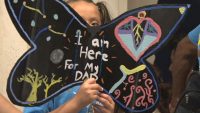
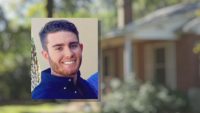
Florida’s tough new anti-hazing law will be called “Andrew’s law” in memory of an FSU Student, Andrew Coffey, who died following an off campus fraternity hazing event.
Coffey was forced to drink an entire bottle of bourbon.
Frat brothers left him to die and were at first reluctant to call for help when he was found dead.
The new legislation provides immunity to the first person who calls for help and it allows someone who organized a hazing but didn’t attend it to also be charged.
“And to make it known that hazing is completely unacceptable, and there will be consequences when you are found guilty of hazing,” said Rep. Susan Valdez.
The Coffey family has testified on behalf of the legislation and believes if it had been the law in 2017, their son might still be alive.
By a vote of 73-39, The Florida House has approved and sent to the Governor a massive education bill revamping teacher bonuses and instituting a new voucher program for 18,000 low income students.
Co-Sponsor Chris Latvala of Clearwater says data shows scholarship students our perform their public school peers.
“Scholarship students were eleven to twenty percent more likely than public school students to earn a bachelors degree. Those who were on the scholarship for at least four year were forty-five percent more likely to get a degree,” said Latvala.
Democrats tried but failed to require private schools to meet the same standards as public schools
“If we’re gonna do this, if we’re going to require our public schools to hold hold themselves to a level of accountability, then why can’t we do the same on the other side,” said Rep. Nicholas Duran.



 No Comments »